
- Why the Coachella Valley’s low humidity and wind events challenge your tear film
- Common desert eye complaints: gritty sensation, redness, blurry vision, reflex tearing, contact lens intolerance
- 5 practical protection tips: wraparound sunglasses, preservative‑free tears, hydration, humidifiers, and when not to ignore symptoms
- When to see an eye doctor – and how Desert Vision Center treats chronic dry eye
- Advanced options like LipiFlow for evaporative dry eye
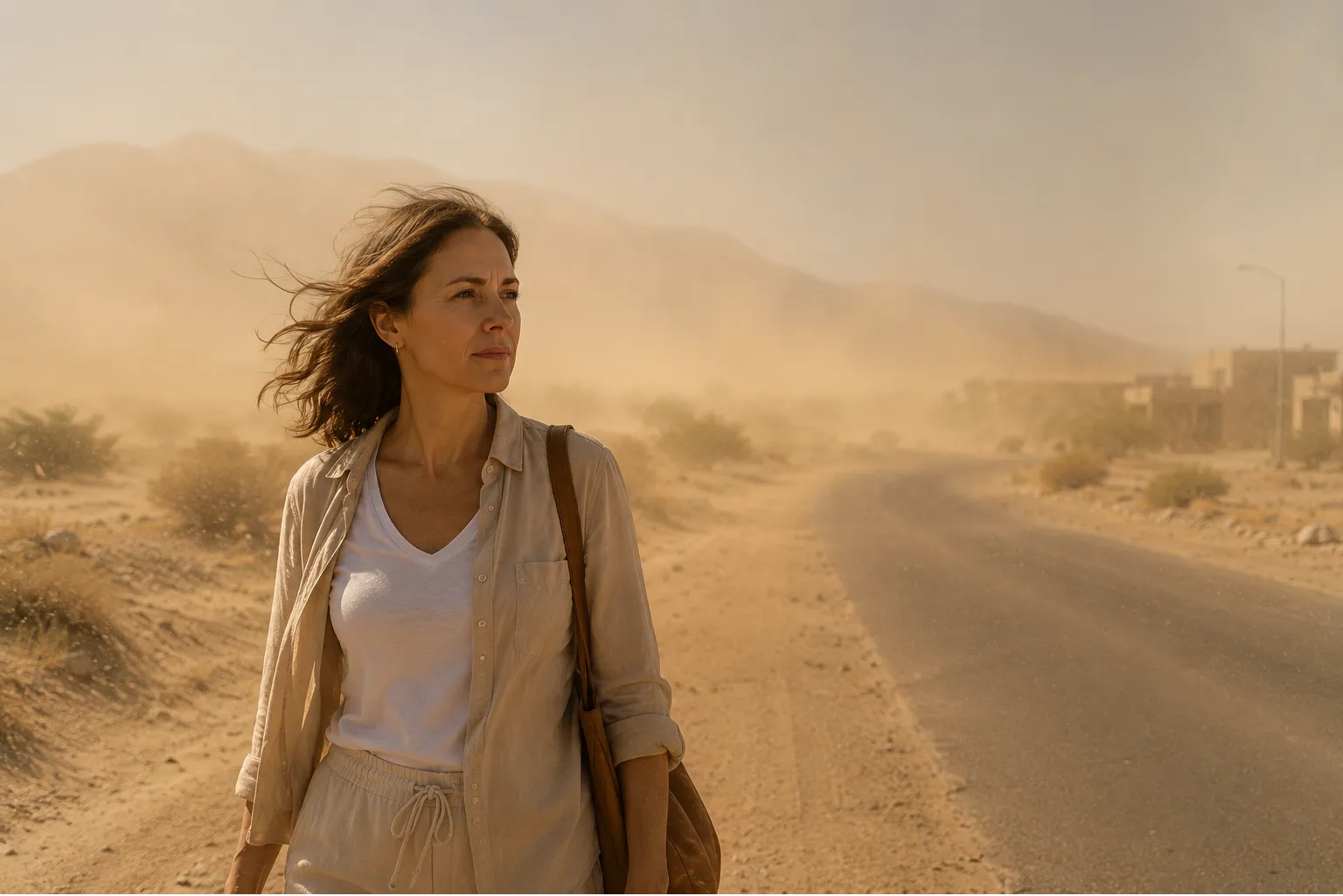
Living in the Coachella Valley means sunshine, mountain views, and a lifestyle that is hard to beat. It also means wind, dust, and some of the driest air in the country. For your eyes, that combination creates challenges you will not find in other climates.
If you have lived here long enough, you know the drill. A spring wind event kicks up. Sand and fine particulate blow across the valley floor. By evening, your eyes are red, gritty, and irritated. You reach for eye drops, blink through the discomfort, and assume it will pass.
Sometimes it does. Sometimes it does not.
The Coachella Valley sits below sea level in parts, surrounded by mountains that channel wind through narrow passes. Average humidity hovers around 15 to 25 percent for much of the year. During wind events, particulate matter fills the air, everything from fine sand to agricultural dust to pollen from date palms and ornamental landscaping.
Your eyes rely on a thin film of moisture, the tear film, to stay comfortable and to protect the delicate surface of the cornea. In the desert, that tear film evaporates faster than in most climates. Add wind, and the evaporation accelerates. Add dust particles, and the surface of the eye can develop micro-irritation that compounds over time.
This is why so many Coachella Valley residents deal with chronic dry eye, even people who never had eye problems before moving here.
Common Desert Eye Complaints We See at Desert Vision Center
The feeling that there is something in your eye, even when there is not. This is often the tear film breaking down faster than your eyes can rebuild it.
Wind strips moisture from the eye surface and can deposit irritants. Red eyes after a windy day are not just cosmetic. They signal surface inflammation.
An unstable tear film causes light to scatter unevenly across the cornea. Your vision may fluctuate throughout the day, worse in the afternoon, better after you blink or use drops. This is not a prescription problem. It is a surface problem.
Your eyes water when it is windy, which seems like the opposite of dry eye. But reflex tearing, the flood of watery tears your eyes produce in response to irritation, does not fix the underlying dryness. It washes over the surface without restoring the protective lipid layer that prevents evaporation.
Desert conditions make contact lenses less comfortable. Lenses sit on the tear film, and when that film is compromised, the lens dries out, moves, and irritates.
Protecting Your Eyes in the Desert
- Wear wraparound sunglasses outdoors. Not just for UV protection. The physical barrier reduces wind exposure and slows tear evaporation. Polarized lenses reduce glare from bright desert surfaces.
- Use preservative-free artificial tears. Over-the-counter lubricating drops help, but the type matters. Preservative-free formulations are gentler on the eye surface, especially with frequent use. Avoid drops that promise to “get the red out.” Those contain vasoconstrictors that can make dryness worse over time.
- Stay hydrated. It sounds basic, but dehydration directly affects tear production. In a climate where you lose moisture through your skin and lungs faster than you realize, water intake matters more than you might think.
- Use a humidifier indoors. Air conditioning removes moisture from indoor air. A bedside humidifier, especially overnight, helps maintain a more comfortable environment for your eyes while you sleep.
- Do not ignore persistent symptoms. Occasional dryness is normal in the desert. But if your eyes are consistently red, gritty, or blurry, or if drops are not helping, you may have a condition that needs treatment beyond over-the-counter solutions.
When to See an Eye Doctor
If you have been using artificial tears daily for weeks and your symptoms are not improving, something more may be going on. Conditions like meibomian gland dysfunction, blepharitis, or chronic inflammatory dry eye can look like simple desert dryness but require targeted treatment.
At Desert Vision Center, Dr. Keith Tokuhara evaluates the full picture: tear film quality, gland function, surface inflammation, and environmental factors. Treatment may include prescription drops, warm compress therapy, or advanced options like LipiFlow, which address the root cause of evaporative dry eye rather than just masking the symptoms.
Desert living should not mean living with uncomfortable eyes. Most dry eye conditions respond well to treatment once properly diagnosed. The key is not waiting until it becomes a daily frustration.
If your eyes have been telling you something is off, listen to them.
Schedule an evaluation at Desert Vision Center and find out what is really going on, and what can be done about it.
Or call us directly at 760-340-4700