
- Cataracts – UV exposure accelerates clouding of the natural lens, often years earlier than in cloudier climates.
- Pterygium – A fleshy growth on the white of the eye, triggered by UV, wind, and dust.
- Macular degeneration – Cumulative UV and blue light may damage the macula, the center of your retina.
- Dry eye – Desert low humidity plus UV stress inflames the ocular surface, making tears evaporate faster.
- Photokeratitis – A sunburn of the eye, painful but temporary; repeated episodes add to long‑term damage.
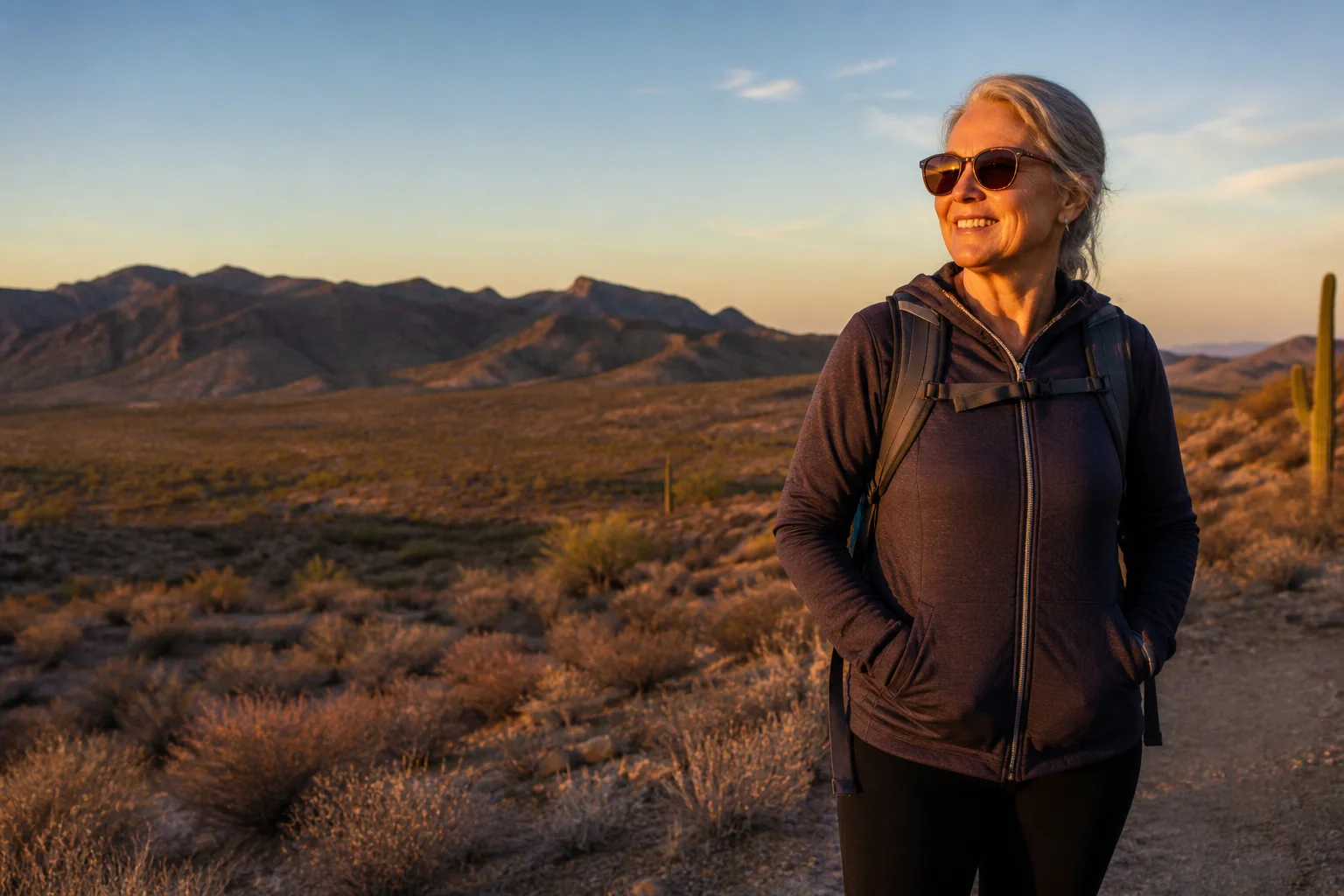
If you live in the Coachella Valley, you already know the sun here is different. It’s not the gentle warmth you get along the coast. From Palm Desert to Rancho Mirage to Palm Springs, we get over 300 days of sunshine a year, and that relentless UV exposure takes a real toll on your eyes, often in ways people don’t realize until the damage is already done.
I tell my patients all the time: the desert is one of the most beautiful places to live, but it’s also one of the hardest on your eyes. Between the direct overhead sun, the reflection off pool decks and sand, and the sheer number of hours we spend outdoors, our eyes absorb significantly more ultraviolet radiation than people living in cloudier climates. And UV damage to the eyes is cumulative. It builds up over years, silently, until it starts affecting your vision.
So what exactly does all that sun exposure do? Let me walk you through the most common conditions I see at Desert Vision Center that are directly related to our desert lifestyle.
Cataracts are the big one.
Prolonged UV exposure accelerates the clouding of your natural lens, and I see patients in the Coachella Valley developing visually significant cataracts earlier than you might expect. The proteins in your lens break down faster with UV exposure, leading to that gradual haze that makes colors look washed out, night driving more difficult, and reading harder than it used to be. If you’ve lived here for decades, golfing three or four times a week, hiking in the Indian Canyons, or just spending time by the pool, your lens has been absorbing UV light the entire time.
Pterygium is another condition I see frequently.
You might hear it called “surfer’s eye,” but it’s just as common in desert dwellers. It’s a fleshy, wedge-shaped growth on the white of the eye that creeps toward the cornea. Wind, dust, and UV light all contribute, and the Coachella Valley delivers all three in abundance. In early stages it’s mostly cosmetic, but if it grows over the cornea it can distort your vision and require surgical removal.
Macular degeneration is a more serious long-term concern.
Research continues to suggest that cumulative UV and blue light exposure contributes to damage in the macula, the part of the retina responsible for your sharp central vision. For patients who’ve spent decades outdoors in the desert, this is something I monitor carefully during comprehensive eye exams.
Dry eye is something nearly everyone in the valley deals with at some point.
Our humidity levels can drop into the single digits, and when you combine that with wind and air conditioning, the tear film evaporates faster than your eyes can replenish it. Add UV exposure on top, and the surface of the eye takes a beating. Patients come in thinking they just need allergy drops, but sometimes the underlying issue is chronic inflammation driven by years of environmental stress.
Photokeratitis is the eye equivalent of a sunburn, and yes, it happens here.
A long day on the golf course without proper eyewear, an afternoon hike at Joshua Tree, or even extended time driving with the sun hitting your windshield at just the right angle can cause it. Symptoms include pain, redness, tearing, and temporary blurred vision. It usually resolves within a day or two, but repeated episodes add to your cumulative UV burden.
Now, the good news. Protecting your eyes from desert sun damage is straightforward.
Here’s what I recommend to every patient who walks through our doors.
Wear quality sunglasses every single time you’re outside.
And I mean every time, not just at the pool. Look for lenses that block 100% of both UVA and UVB rays. Wraparound styles are even better because they block light coming in from the sides. If you’re a golfer, invest in sport-specific lenses with UV protection and polarization to cut the glare off fairways and greens.
Wear a wide-brimmed hat.
Sunglasses alone don’t catch everything, especially overhead light. A hat with at least a three-inch brim cuts UV reaching your eyes by roughly half. I see a lot of patients who wear great sunglasses but skip the hat, and it makes a difference.
Stay hydrated and use lubricating drops.
In our climate, keeping your tear film stable is an ongoing effort. Artificial tears, staying well-hydrated, and even using a humidifier at home during the driest months can help protect the eye surface from environmental damage. Learn more about dry eye disease treatment at Desert Vision Center.
Get regular comprehensive eye exams.
This is the most important piece. UV damage is silent. Cataracts develop gradually. Pterygium can grow slowly for years. Macular changes can start before you notice any symptoms. A thorough exam catches these problems early, when your options are best and treatment is least invasive.
Schedule your exams consistently, especially if you’ve been a long-time desert resident. I’ve been practicing in Rancho Mirage for over ten years, and the pattern I see is clear: patients who come in regularly do far better than those who wait until something feels wrong.
As a fellowship-trained surgeon and Palm Springs Life Top Doctor from 2019 through 2026, I’ve built Desert Vision Center to give Coachella Valley residents the kind of thorough, independent, physician-led eye care that’s becoming harder to find. We’re not a corporate chain or private equity group. Every decision is made with your eyes and your goals in mind.
Noticing sun-related vision changes?
If glare, cloudy vision, faded colors, or night-driving difficulty are affecting your life in the desert, schedule a cataract-focused consultation with Dr. Keith Tokuhara. He can evaluate whether cataracts or another vision concern is contributing to your symptoms and guide you honestly on next steps.
Request a cataract consultation →
Or call us directly at 760-340-4700